
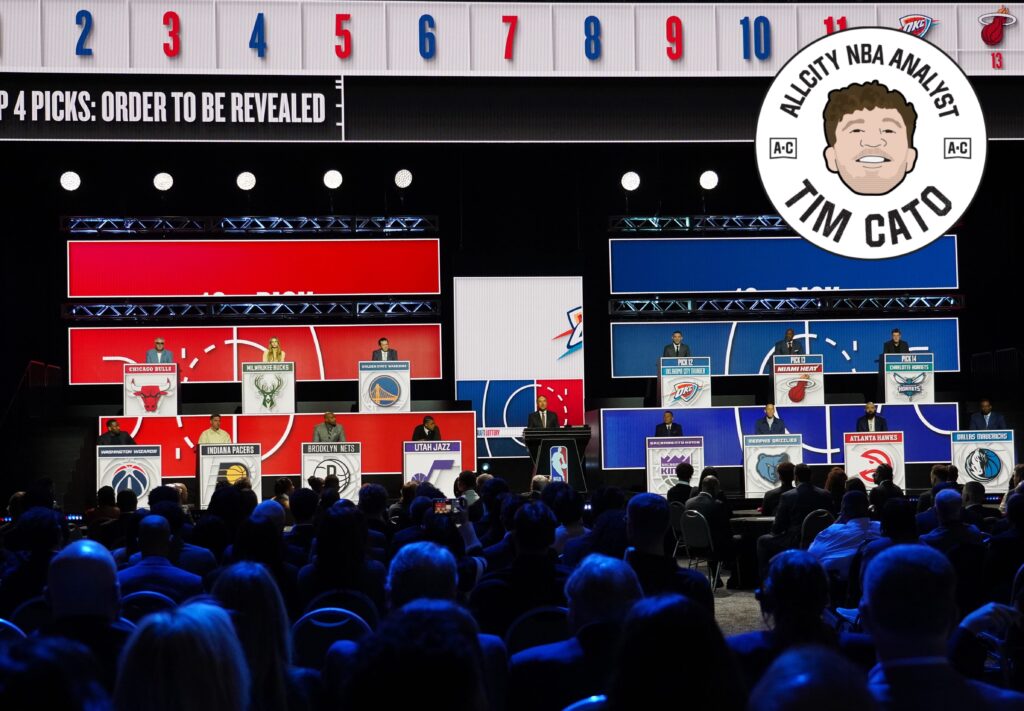
The 2026 NBA lottery, for the first time since 2018, was won by the league’s worst team on Sunday. The Washington Wizards (best odds), the Utah Jazz (fourth-best), the Memphis Grizzlies (sixth), and the Chicago Bulls (ninth) won the league’s first four picks, respectively, in the last rendition of the league’s current lottery format.
These will be the teams who draft the first 14 selections at next month’s 2026 NBA Draft, which takes place on June 23 and 24.
- Washington Wizards
- Utah Jazz
- Memphis Grizzlies
- Chicago Bulls
- Los Angeles Clippers (via Indiana)
- Brooklyn Nets
- Sacramento Kings
- Atlanta Hawks (via New Orleans)
- Dallas Mavericks
- Milwaukee Bucks
- Golden State Warriors
- Oklahoma City Thunder (via the L.A. Clippers)
- Miami Heat
- Charlotte Hornets
Now, let’s run through some winners and losers from this year’s results.
WINNERS: The Tankers
WINNER: Adam Silver’s lottery reform
Adam Silver would’ve looked a bit silly if the 2026 lottery had repeated last year’s randomness, which saw the three worst teams fall to selections four through six while two teams rose 10 and six spots — Dallas and San Antonio, respectively, of course — from where they were likeliest to draft. If tanking teams still fell, you just know one post-lottery narrative would’ve been: Why was this necessary?
That isn’t, of course, how the odds work. Next season, if the NBA ratifies its proposed lottery reform, will be the first season teams aren’t mathematically incentivized to be the worst team if they seek the best pick. I don’t think tanking was the league’s most urgent issue, and I have mixed thoughts about how the new system will work. But several teams that blatantly tanked in the season’s final months were rewarded for it at this year’s lottery. That’s what Silver’s proposed reform is meant to correct.
Washington, Utah, and Memphis were some of the league’s most egregious tankers. The Wizards barely played Trae Young and never considered allowing Anthony Davis to return from injury; they aggressively shut down or sat out their better youngsters by mid-March. Bilal Coulibaly did play seven of the team’s final 12 games but never more than 25 minutes.
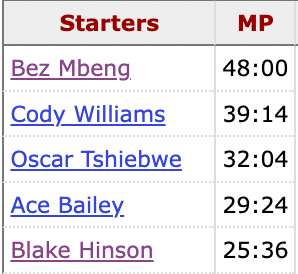
Utah was fined for its tanking extremes, an indirect result of them having good players who merited inclusion under the NBA’s Player Participation Policy, eventually shutting down most of those players with genuine injuries. But to name another tanking exploit it used, Utah signed Bez Mbang to a contract in early March and then played him 33 minutes per night in its 15 games to conclude its season. He helped them lose 13 of those 15, including the season finale, in which he started and played every second.
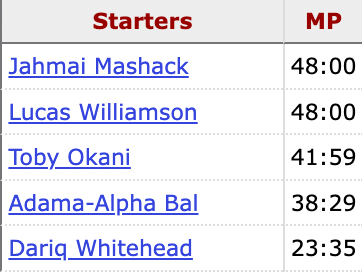
Memphis’ explicit tanking wasn’t as discussed and yet might’ve been even more blatant. Look at its starting lineup in its final game!
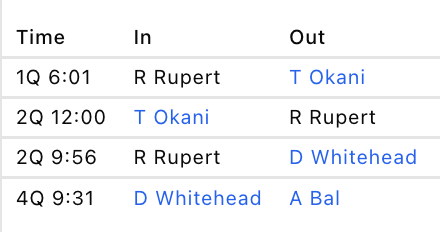
Not only that: Memphis made only four substitutions in that game. Four!
Every team tanked down this season’s stretch, to be clear, a rational choice to make when everyone else was doing it, too. It was almost certainly amplified by this draft class, and possibly even because teams understood lottery changes were coming. In the draft lottery’s 42-year history, the team with the league’s worst record has only won the draft nine times, and it hadn’t happened since the league’s 2019 change to the lottery odds. But with Washington’s win, it does express what drove the league to reform: Losing works.
LOSER: The Pacers’ gamble
You cannot be a lottery winner if your team’s president of basketball operations tweets this following the results.
Indiana chose its 52.1 percent odds to keep its first-round pick. Despite this lost season, the Pacers traded that selection with top-four protections to acquire Ivica Zubac from the Clippers, betting on the chance the team could solve its need for a center next season and an elite prospect at the same time. I didn’t hate the process at the time; this draft class, despite its depth and strengths, doesn’t have top-of-the-lottery center prospects. The players the Pacers would choose between with the fifth or sixth pick, almost certainly, would be point guards who might not immediately fit the roster as Indiana prioritizes contention next year.
But let’s be honest: If Indiana had acquired Zubac another way and still fell to the fifth overall selection, it’s unlikely the team would trade out of that selection. The team’s star, Tyrese Haliburton, is 26 but has had some medical issues beyond his Achilles rupture, which he should return from at full strength. You can’t guarantee that, though. More specifically, you can’t guarantee to recreate last season’s postseason magic, which already unexpected and hadn’t fully been backed up by the team’s regular season that year.
I’ll be bullish on Indiana next season, don’t get me wrong. This roster seems poised to be one of the East’s best two or three units. If Darryn Peterson or Cam Boozer were on the team, too, the ceiling would be even higher. That was the gamble that Pritchard made. Because it didn’t pan out, Indiana instead solved its center need at a costlier price than Zubac warranted.
The process doesn’t become worse because this didn’t pan out. If you disliked the deal then, it’s fine to dislike it now. But in a results-driven league, these weren’t the ones Indiana wanted.
WINNER: The Clippers’ best case scenario
The Clippers won for the inverse reasons, of course. Their Zubac and James Harden trade deadline deals netted them this:
- Darius Garland
- Bennedict Mathurin
- Isaiah Jackson
- The 5th pick of the 2026 draft
- The 52nd pick of the 2026 draft
- Indiana’s 2029 first-round pick
L.A. owed its first-round pick this year to Oklahoma City; the team doesn’t outright own one of its first-rounders until 2030, creating horrific circumstances to rebuild even as the Clippers proved they weren’t contenders during the first third of the season. Thankfully, the team turned it around; another winner today is the entire NBA, which should be thankful Oklahoma City didn’t stumbled into a top-four selection. But L.A. now has far more optionality than it could’ve imagined in, say, November.
WINNER: The Bulls’ new direction
Chicago moved up five spots, more than any other team this season, which coronates the Bulls’ choice to reset its entire basketball future. Next season, the Bulls have a new head coach and new top-five prospect while being run by a new front office led by Bryson Graham, the team’s new general manager hired from the Atlanta Hawks.
Graham has harped on his team-building acronym SLAP, standing for size, length, athleticism, and physicality, which perfectly matches Caleb Wilson, a hyperathletic 6’10 forward who most analysts currently project to be picked fourth. I’m not yet quite convinced the top-four will go in the projected manner, but Wilson or any of the projected top-three players is the right way to start this new era.
LOSER: Brooklyn’s rotten luck
Brooklyn made sure it had control of its picks this year and the prior one, planning to tank these two seasons and build around whichever star the team landed, which always seems inevitable when teams begin to tank like this. Instead, Brooklyn’s sixth-best odds last season dropped them to the eighth selection; its third-best odds for this lottery led to them falling to sixth.
There will be guards with tantalizing potential they can draft there, but will that be enough to rise above the worst-in-the-league zone, something now crucially important to teams if the league begins punishing those finishing bottom-three? Note that Brooklyn has had recent lottery success: In 2024, the team rose from the ninth-best odds to select third overall. It’s just that the Houston Rockets owned that pick.
It’s hard to fault the Brooklyn fans that were crashing out.
WINNER: The Rockets’ future picks
As Houston contemplates whether it needs to pivot this summer, it has to be pleased that Brooklyn still doesn’t have its A-list talent. In 2027, Houston can (and so almost certainly will) swap its first-rounder with Brooklyn’s; the team also owns Phoenix’s. In 2029, Houston will receive the best two first-round selections between their own, Phoenix’s, and the Dallas Mavericks’.
Dallas fell one spot; the team with the eighth-worst record will draft ninth one year after one of the craziest lottery wins we’ve seen. This has been Dallas’ last guarantee for another lottery talent; you could argue ninth was the team’s worst case scenario and moves them out of the lottery’s second tier. At the same time, the Mavericks have Cooper Flagg, a new team president in Masai Ujiri, and plenty of moves the team can make to build around him. It wasn’t the ideal outcome, but the future is still far better than it was this time last year.
Tim Cato is ALLCITY’s national NBA writer currently based in Dallas. He can be reached at tcato@alldlls.com or on X at @tim_cato.