© 2026 ALLCITY Network Inc.
All rights reserved.


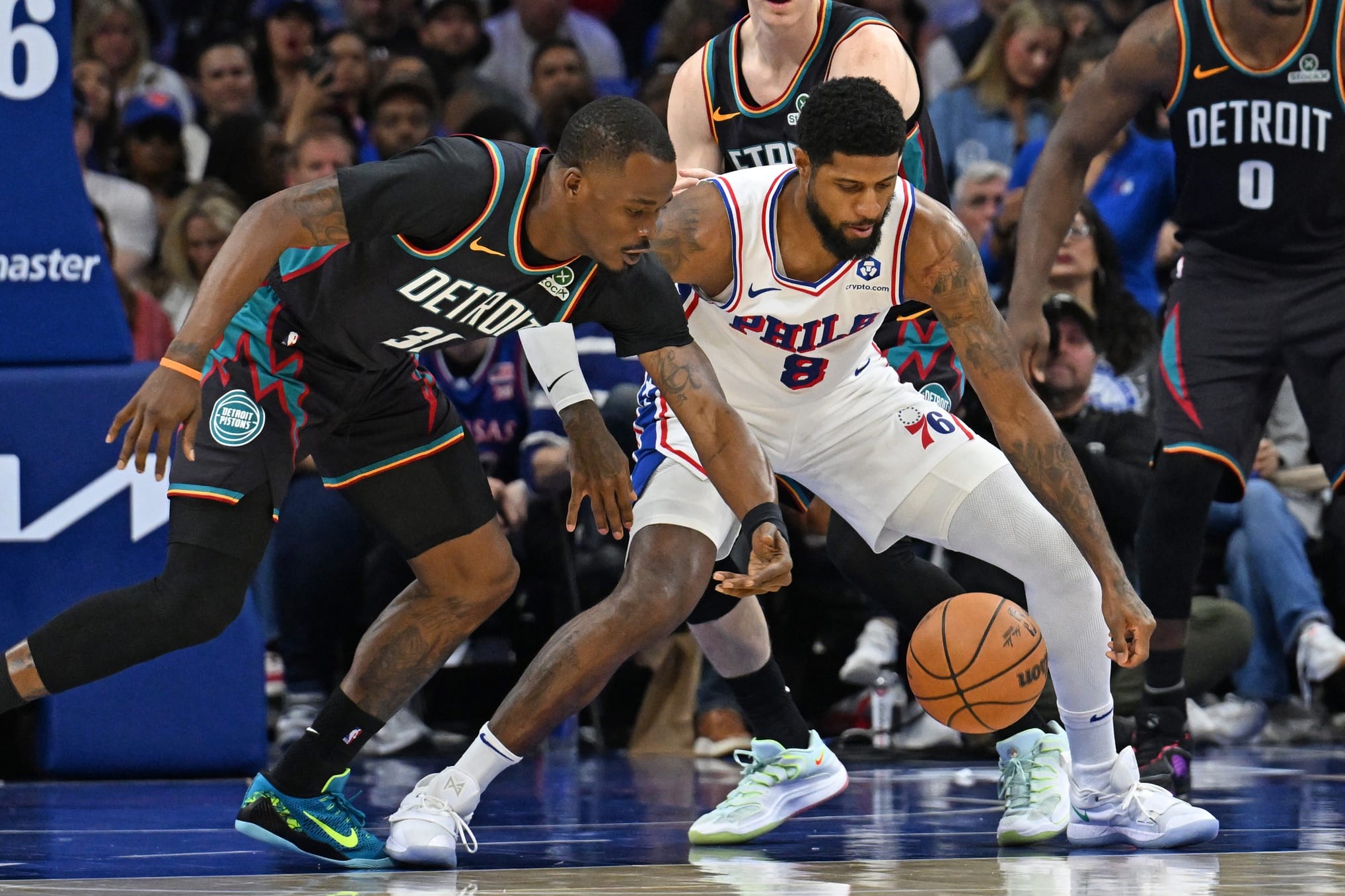
The Pistons came in and smacked the Sixers in the second half of Philadelphia’s back-to-back, running the score up in the second half for a 116-93 victory. Paul George’s hot start kept the Sixers close, but the 76ers were ultimately no match for Detroit’s swarming defense.
Here’s what I saw.
I believe it’s time for the Sixers to start petioning the league to institute a midseason break a la the German Bundesliga. Watching Paul George go to work since returning from his suspension has to have you thinking bigger, whether it’s about maximizing this season or getting the best out of him in the final two years of his contract. There are no ideas that are too bold!

The first half was all about George’s three-level scoring for Philadelphia, with the veteran wing taking it to Detroit from the very first possession of the game, immediately drawing a foul on a drive straight into the teeth of their defense. George’s ability to put pressure on the rim is the biggest difference between what we’ve seen for the last week and a half of the rest of his Sixers tenure — with George able to sell the idea that he can go by defenders, it has created the extra bit of separation he needs on pull-up jumpers. Even Ausar Thompson — a nuclear athlete who will be a yearly All-Defense candidate as long as he’s healthy — struggled to bother George as he lit the Pistons up from all over the floor.
During the opening minutes of the second quarter, the Sixers were in the danger zone, trailing by double digits with Maxey on the bench and Joel Embiid in street clothes. It was George who did most of the heavy lifting to pull them back into the game. A deep catch-and-shoot three to start it off, some pull up jumpers from the midrange, and the always savvy defense away from the ball, with George lurking in passing lanes to deny cross-court passes to the corners.
During the George-less minutes in the first half, things came unraveled for the Sixers. He was a +4 at halftime with Maxey (-20), Drummond (-14), and Kelly Oubre (-17) all getting pasted during their time on the floor. George’s ability to shore things up on both ends was missed desparately, with Jutin Edwards drowning in a five-minute, first-half stint that was designed to get George a momentary breather. A see-saw battle turned into a double-digit halftime lead for Detroit.
It was much tougher sledding in the second half, which you could chalk up to a few factors. With the Sixers on a back-to-back and George playing his first of those in a while, it’s not exactly stunning he couldn’t sustain that level of play for for 48 minutes. He still looked pretty good physically, driving past Thompson for a beautiful drive-and-kick three in the corner from Maxey, but he certainly wasn’t as sharp, failing to connect on some pretty basic passes on actions where his teammates either left too soon or didn’t get to a spot quick enough. Shots stopped dropping, which put more pressure on the backcourt to generate offense.
The other big story was how tough life was for Philadelphia’s guards, who battled but ultimately fell short of anything resembling a winning effort.
The Pistons, as you might expect, hounded Maxey at every opportunity. After he scored a quick 14 points, things slowed down from there, and Detroit did well to crowd Maxey on most ball screens. Detroit’s success wasn’t from stopping him altogether, but preventing him from getting more shots up and denying him most high-value passes. Philadelphia’s options in the short roll, from Drummond to Bona to Dom Barlow, didn’t make good use of the space or passing options in front of them. And even though he was relatively efficient, Maxey missed a lot of the run-stopping shots that might have changed the trajectory of the game.
I thought Edgecombe rebounded relatively well from a poor halfcourt performance against the Timberwolves, taking advantage of some smaller and/or slower matchups as the lead ballhandler. He has begun to perfect the mechanics and craft of the midrange turnaround, lulling defenders to sleep before spinning over either shoulder for a jumper his defenders can’t quite get to. Duncan Robinson and Daniss Jenkins both struggled to cope with Edgecombe in the intermediate areas, and the rookie did well to push the pace in transition, too. But he struggled to create consistent penetration in the second half, and he had some brutal misses on open threes and transition attempts, including a smoked layup in transition with a little under seven minutes to play. His worst crime may have been a lack of ball security, with the rookie giving away some crucial possessions in the second half as Philly tried to mount their comeback.
The Pistons live to punish your mistakes, and they ripped the Sixers apart on a gaggle of third quarter fast breaks. If they were going to have a chance to win this game, it needed to be a relatively mistake-free night, and between Detroit’s ball pressure and their own mental fatigue, the floor gave out in what must be the 50th bad third quarter of the season.
(Let me add one more note here: Detroit is an awesome defensive team that plays with discipline and constant fight, but it sure feels like they are benefitting from the same “swallow the whistle” phenomenon that defense-first teams pick up once they begin to make a name for themselves. The Sixers got hit with some ticky-tack fouls while rarely getting the same benefit of the whistle on the other end.)
The issues for Philadelphia were largely on the defensive end in the first half, which is pretty shocking given how good Detroit is at getting stops. I suppose you could take it as a heartening sign that they scored 60 first-half points and left plenty more on the table against an elite defense, if you were only able to ignore the 71 they allowed Detroit to score on the other end. But once that success faded away, their problems on the other end were hard to ignore.
It was a weird (read: bad) game at the center spot, where the matchups played out opposite from how Nurse apparently expected. Andre Drummond got the start against Jalen Duren in a more like for like size matchup, but the veteran was pathetic on the boards, beaten up and too slow as the Pistons took advantage of him. Adem Bona did a better job of making Duren work defensively, but he wasn’t much better around the rim, and certainly didn’t leave an impact on the glass.
Philadelphia had a pitiful game of guarding back cuts. They lost Tobias Harris and Ausar Thompson on what felt like every other possession, failing to communicate or switch when appropriate, and those were just two of the guys who managed to pants the Sixers off-ball. I’m not sure why the Sixers waited as long as they did to bust out a zone, because the Pistons shot okay on Saturday but have at least a few questionable shooters you can hope to dare into long-range jumpers. Rebounding in the zone is another story, but considering they gave up six offensive rebounds in the first quarter out of exclusive man-to-man looks, I’m not sure that mattered much anyway.
A lot of tired legs and minds on the back-to-back, certainly, but pretty poor even by those standards.
— Cam Payne left the game in the first half with an injury that was immediately identifiable as a hamstring issue as he reached back for his leg. Don’t think we’ll be seeing him for a little bit.
— A perfect game to illustrate how Quentin Grimes often tells you the story of the basketball game. When he is rolling or at least playing smart two-way basketball, they can hang with almost anyone. When he plays like he did on Saturday night, throwing away possessions in the fourth quarter from picking up his dribble too soon, they are going to have a bad time.